The Silent Killer on Your Skin, Why Hives and Breathing Changes
The Silent Killer on Your Skin, Why Hives and Breathing Changes Are a Deadly Signal You Cannot Afford to Ignore
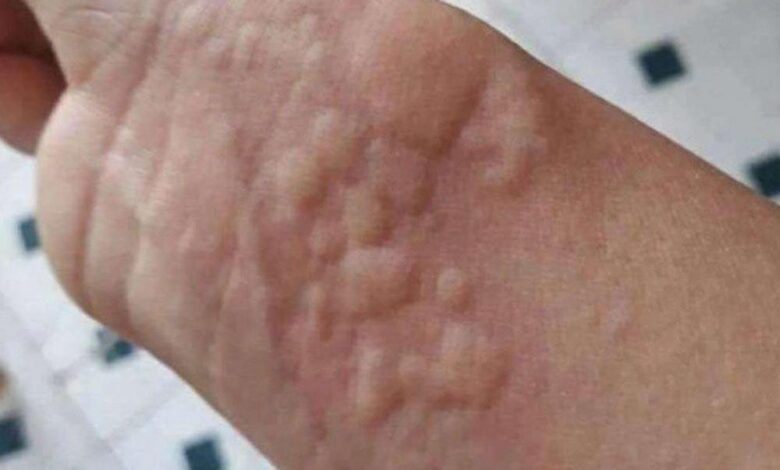
The human body is a living archive of survival, a complex biological machine that usually operates with a quiet, predictable rhythm. But sometimes, the mask of health slips, and the body begins to send urgent, high-stakes signals that a catastrophe is unfolding just beneath the surface. For many, a breakout of hives—those itchy, raised red welts—is dismissed as a minor irritation, a “clumsy” reaction to a new laundry detergent or a stray patch of poison ivy. However, when these skin flares are accompanied by even the slightest shift in respiration, the narrative changes from a simple annoyance to a “forensic” emergency. This is the moment where the skin acts as a map of a much deeper, internal crisis, revealing a full-body allergic storm known as anaphylaxis. Understanding the radical transparency of these symptoms is not an act of anxiety; it is a life-saving necessity.
Anaphylaxis is an explosive, systemic reaction that occurs when the immune system, once a reliable shield, suddenly views a harmless substance as a mortal enemy. It is a “private horror” that can manifest in anyone, regardless of their medical history. One of the most terrifying aspects of this condition is its unpredictability. You may have spent decades eating the same shellfish, taking the same medications, or walking through the same blooming gardens without a single issue. But the immune system is not static; it is a fluid, evolving entity that can change quietly over the years. A substance that was a “safe” part of your daily life for sixty years can suddenly become the catalyst for a total physiological collapse. When the body decides to break its silence, it does so with a terrifying intensity that leaves no room for hesitation.
The visual component of this crisis—the hives—is often the first warning. They can appear anywhere on the body, blooming like a battlefield of self-hatred across the chest, arms, and face. But the real danger lies in what happens next. If those welts are joined by a tightening in the chest, a strange discomfort in the throat, or the sudden, rhythmic hiss of wheezing, the “bridge” between a local reaction and a systemic failure has been crossed. Swelling of the lips, tongue, or face are not just cosmetic changes; they are the external signs of internal pathways being constricted. This is a “game of chess” where the stakes are your very breath, and the opponent is an overactive immune response that refuses to back down.
For those over the age of sixty, listening to these signals is an act of profound wisdom. There is often a cultural tendency to “tough it out,” to downplay discomfort, or to wait for the symptoms to pass. But in the face of an allergic storm, waiting is the most dangerous move you can make. Hesitation is the real killer. Treating a breathing change as an urgent, high-priority event is not an overreaction; it is a deliberate act of reclamation over your own life. If you have been prescribed an epinephrine auto-injector, this is the moment to use it. Epinephrine acts as a “knife” to the allergic reaction, cutting through the inflammation and opening the airways before the “mask” of the throat closes entirely.
The psychology of an emergency often involves a sense of disbelief. Victims frequently describe a feeling of “unexplained anxiety” or a sense of impending doom right before the physical symptoms peak. This is the brain’s way of sounding the alarm before the lungs fully fail. It is a “forensic” belief that something is fundamentally wrong, even if the person cannot yet put it into words. Sharing this knowledge within your community is a way of building a sanctuary of truth. By educating friends and family on how to recognize the intersection of skin changes and respiratory distress, you are providing them with the “map” they need to navigate a crisis.
The medical reality of anaphylaxis is that it requires a rapid, clinical intervention. Calling emergency services is the only way to ensure that the “living archive” of your body continues to function. Paramedics and doctors have the tools to manage the blood pressure drops and the secondary waves of inflammation that often follow the initial shock. This is a situation where radical transparency with medical staff is essential. They need to know every detail: what you ate, what you touched, and exactly how the symptoms unfolded. This isn’t just data; it’s the “forensic” evidence they need to stabilize the storm.
We often think of our health as a birthright, something that is guaranteed until it isn’t. But a major allergic event reminds us that our biological safety is a “shielded” state that can be pierced at any moment. The transition from a “gentle, hopeful” afternoon to a life-threatening emergency can happen in the blink of an eye. This is why awareness is the ultimate protection. Knowing that hives plus wheezing equals a 911 call is a piece of information that carries immense moral weight. It is the difference between a tragedy and a story of survival.
As we navigate a world where health information is often buried under a “mask” of sensationalism or ignored in the noise of daily life, focusing on these fundamental warnings is vital. Your body is not trying to trick you; it is trying to save you. When the skin speaks in welts and the lungs speak in gasps, the message is clear. It is an insistence on immediate action. No one should ever have to face an allergic storm alone, and no one should feel ashamed for seeking help when their body is in a state of “radical” distress.
In conclusion, the intersection of hives and breathing changes is one of the most critical “hidden journeys” your health can take. It is a narrative of survival that requires you to be the protagonist. Don’t let the fear of being an “inconvenience” prevent you from seeking the care you need. Your life is an extraordinary bond between your spirit and your physical form, and protecting that bond requires the courage to act when the “silence” is broken. Whether it’s a food allergy, a drug reaction, or a sting from a creature in the wild, the rules of the game are the same. Listen to the “forensic” evidence of your own symptoms, trust the wisdom of your instincts, and never underestimate the power of a quick response. The truth is written on your skin and in your breath—make sure you are ready to read it before the clock runs out.














Comments
Post a Comment